Last updated : 06 Oct 2026
Jackfruit Seeds: Nutrition, Benefits, How to Eat Them
When most people eat jackfruit, the sweet yellow fruit is the part they think about. The large seeds are usually tossed aside without much thought.
But jackfruit seeds are edible, and in many parts of Asia, they have been cooked and eaten for generations. Once prepared properly, they can be boiled, roasted, added to curries, or used in other savory dishes.
They are also more nutritious than you might expect. Jackfruit seeds contain starch, plant protein, dietary fiber, minerals, and a variety of naturally occurring plant compounds.
At the same time, it’s easy to find exaggerated claims about jackfruit seeds online. Some articles describe them as a treatment for everything from high cholesterol to cancer. The research doesn’t justify those claims.
So what are jackfruit seeds actually good for? Can you eat them raw? What’s the best way to cook them? And do they have any real health benefits?
Let’s take a closer look.
What Are Jackfruit Seeds?
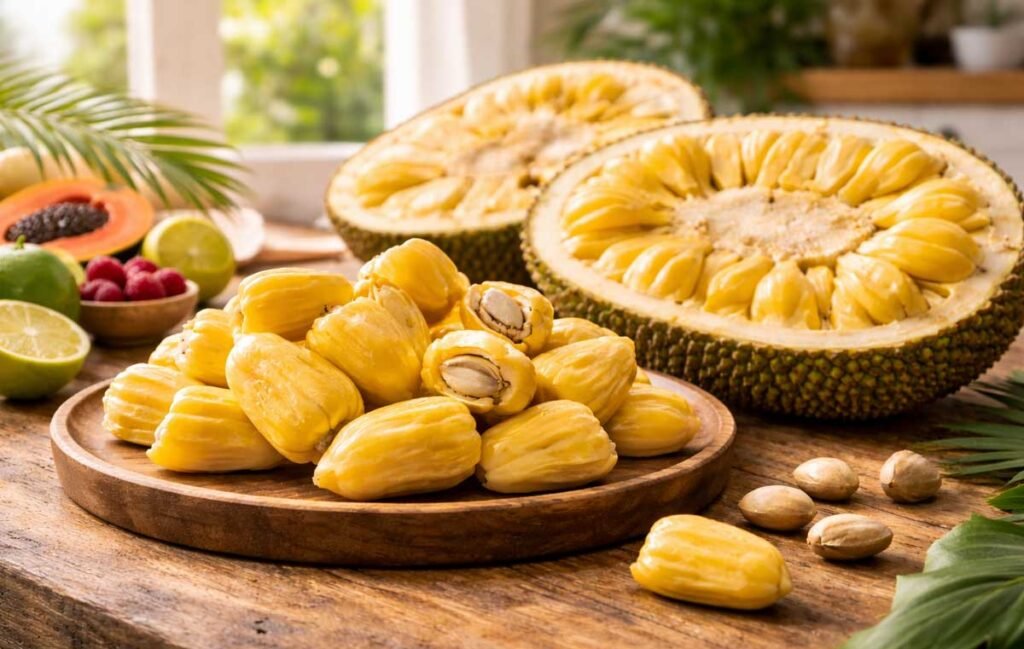
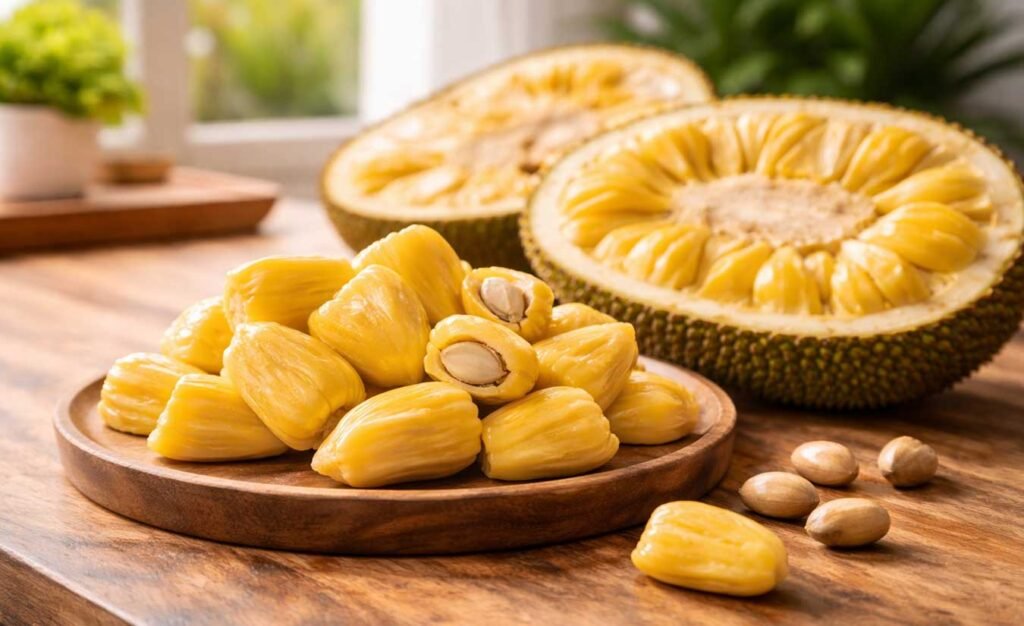
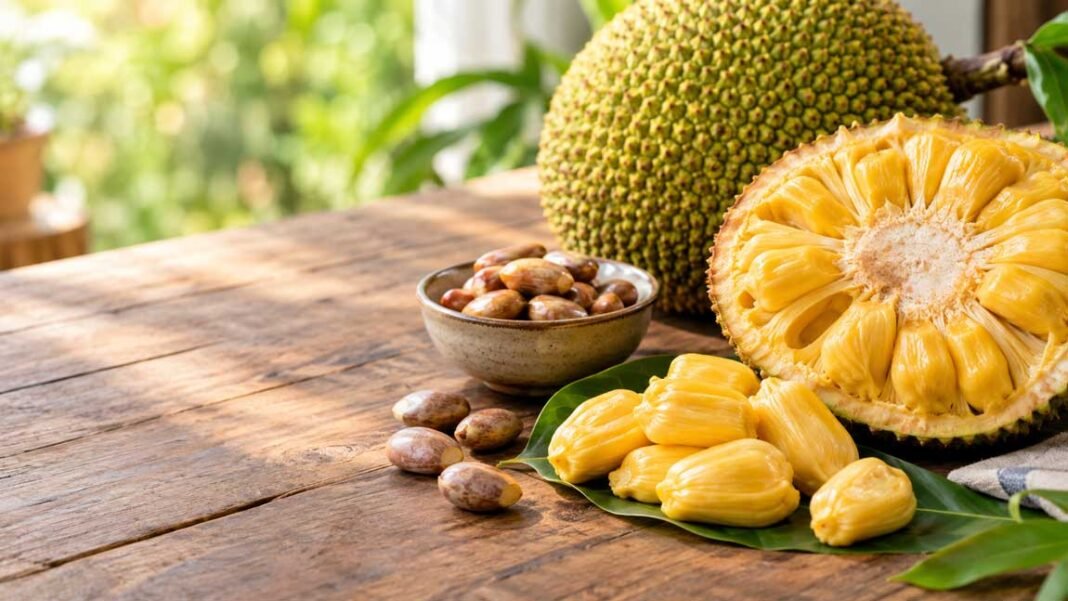
Jackfruit seeds are the large, oval seeds found inside the fruit of the jackfruit tree (Artocarpus heterophyllus).
A mature jackfruit can contain many seeds. While the sweet fruit bulbs are commonly eaten fresh, the seeds can also be saved and cooked.
In places where jackfruit is a familiar food, people prepare the seeds in several ways. They may be boiled, roasted, added to curries, or incorporated into other traditional dishes.
Nutritionally, the seeds are quite different from the yellow flesh surrounding them.
Jackfruit flesh is juicy and naturally sweet, while the seeds are firm, starchy, and relatively mild in flavor. The seeds also provide protein and certain minerals that make them an interesting food in their own right.
Jackfruit seeds have also attracted interest from food researchers because their starch and protein make them potentially useful for flour and other food products.
Jackfruit Seed Nutrition
Jackfruit seeds are primarily a source of carbohydrates, especially starch, but they also provide protein, fiber, and minerals.
The exact nutritional composition isn’t identical from one jackfruit to another. It can vary with the variety of jackfruit, growing conditions, maturity, and whether the seeds are fresh, boiled, dried, or processed into flour.
Research has found protein, calcium, magnesium, phosphorus, dietary fiber, and resistant starch in jackfruit seeds. The proportions can vary considerably between studies.
That’s why it’s better not to treat one nutrition number found online as the definitive nutrition profile for every jackfruit seed.
In general, jackfruit seeds provide:
-
Starch and other carbohydrates
-
Plant protein
-
Dietary fiber
-
Magnesium
-
Phosphorus
-
Calcium
-
Various phenolic and flavonoid compounds
Why Do Jackfruit Seed Nutrition Numbers Differ?
If you’ve looked up jackfruit seed nutrition before, you may have noticed that different websites report different amounts of calories, protein, carbohydrates, and other nutrients.
There are several reasons.
Fresh seeds contain more water, while dried seeds and seed flour are much more concentrated. Different varieties can also have different compositions. Cooking changes the moisture content and physical characteristics of the seeds as well.
So instead of focusing too heavily on one exact number, it’s more useful to look at the overall nutritional profile.
Jackfruit Seeds Benefits
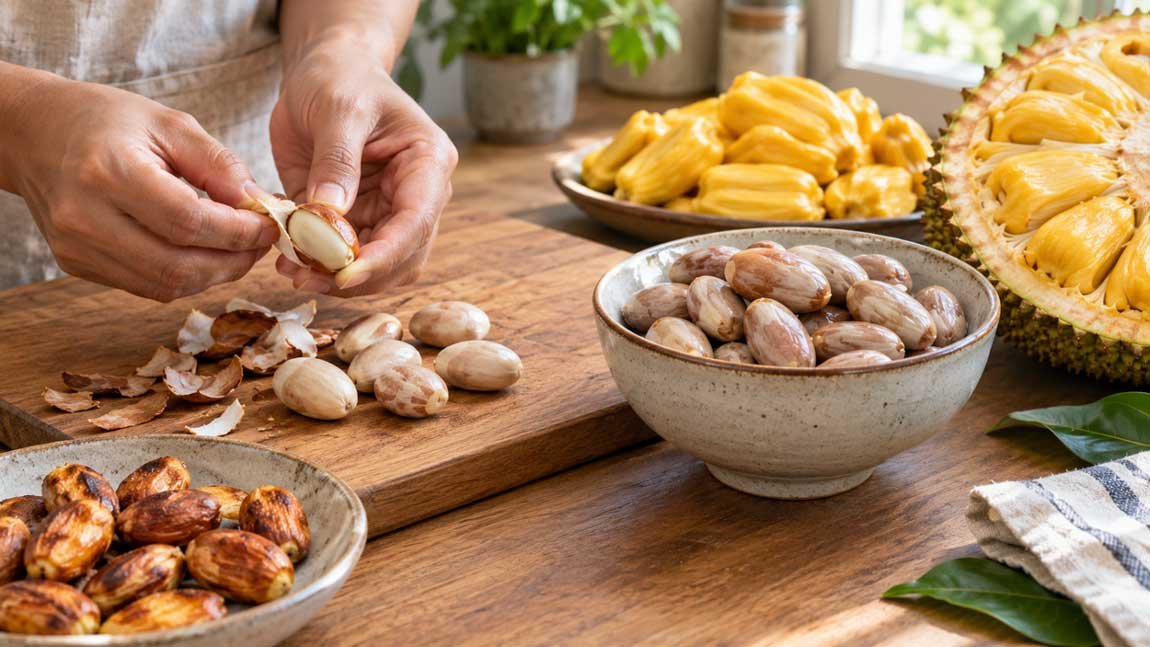
Jackfruit seeds have some interesting nutritional qualities, but it’s important to distinguish between what we know about the food itself and what scientists are still investigating.
Studies have found antioxidant and other biological activity in jackfruit and its different parts. However, much of this research is laboratory-based, animal-based, or otherwise preclinical rather than large human clinical research.
That distinction matters.
A compound showing an interesting effect in a laboratory doesn’t automatically mean that eating the whole food will produce the same effect in your body.
With that in mind, here are the potential benefits worth knowing about.
1. They Are a Good Source of Starch
One of the most noticeable nutritional characteristics of jackfruit seeds is their starch content.
Starch is a carbohydrate that provides energy. This makes cooked jackfruit seeds useful as part of a meal in much the same way other starchy plant foods are used.
They aren’t a low-carbohydrate food, so if you’re following a carbohydrate-restricted diet, portion size is worth considering.
For most people, though, the starch is simply part of what makes jackfruit seeds filling and versatile.
2. They Provide Plant Protein
Jackfruit seeds contain plant protein, and protein is one of the reasons researchers have taken an interest in their nutritional composition.
The exact amount varies depending on the variety and processing method.
That doesn’t mean jackfruit seeds should replace major protein foods such as beans, lentils, eggs, dairy, fish, or meat.
Instead, they can make a modest contribution to your overall protein intake while also providing carbohydrates and minerals.
3. They Contain Dietary Fiber
Jackfruit seeds also contain dietary fiber.
Fiber is important for normal digestive function and is associated with many aspects of a healthy dietary pattern.
Jackfruit seeds can contribute to your overall fiber intake, but it’s better to think of them as one fiber-containing food among many rather than a special digestive remedy.
If you’re not accustomed to eating them and suddenly consume a large amount, you may experience bloating or digestive discomfort.
4. They Contain Antioxidant Compounds
Jackfruit seeds contain phenolic compounds, flavonoids, and other plant compounds that have demonstrated antioxidant activity in research.
Scientists have studied extracts from jackfruit seeds in laboratory settings and found antioxidant activity.
That’s interesting, but there’s an important difference between antioxidant activity measured in a laboratory and proven disease prevention in humans.
Eating jackfruit seeds doesn’t mean you’re automatically protected against cancer, heart disease, or other illnesses.
More human research would be needed before making those kinds of claims.
5. They Provide Minerals
Jackfruit seeds contain minerals such as calcium, magnesium, and phosphorus.
These nutrients are involved in important functions throughout the body. Magnesium participates in hundreds of biochemical reactions, while calcium and phosphorus play important roles in bones and teeth.
However, the amount of a mineral present in a food isn’t necessarily the amount your body absorbs.
Jackfruit seeds also contain compounds such as phytates and tannins that can influence the availability of certain nutrients. Processing and cooking can change the levels and effects of some of these compounds.
6. They May Have Other Bioactive Properties
Researchers have studied jackfruit and its different parts for possible antioxidant, antimicrobial, anti-inflammatory, and other biological activities.
This is one reason jackfruit continues to attract attention in food and nutrition research.
But this is also where online health articles can get carried away.
If a jackfruit seed extract shows an effect against bacteria in a laboratory, that doesn’t mean eating cooked jackfruit seeds can treat a bacterial infection.
For now, the most accurate way to describe the evidence is that jackfruit seeds contain interesting bioactive compounds that researchers are continuing to study.
7. They Help Make Better Use of the Whole Fruit
There’s another practical benefit that doesn’t require a clinical trial: eating the seeds can reduce food waste.
Jackfruit seeds are an edible part of the fruit, yet they’re often thrown away.
Instead of discarding them, you can cook them as a side dish, roast them as a snack, or incorporate them into other recipes.
Researchers have also investigated jackfruit seed flour as a way to make use of this otherwise underused part of the fruit.
Do Jackfruit Seeds Help With Weight Loss?
You may come across claims that jackfruit seeds are a weight-loss food.
There’s not enough evidence to say that eating jackfruit seeds directly causes weight loss.
The seeds contain starch, protein, and fiber, which can all be part of a satisfying meal. But no single food automatically burns fat or causes weight loss.
Your overall eating pattern, calorie intake, physical activity, sleep, and other lifestyle factors have a much larger influence on body weight.
If you’re trying to lose weight, cooked jackfruit seeds can certainly fit into your diet. Just remember that they’re still a starchy food and contribute carbohydrates and calories.
Can Jackfruit Seeds Lower Cholesterol?
This is another claim worth approaching carefully.
Jackfruit contains various nutrients and plant compounds that researchers are investigating for possible cardiovascular effects. However, there isn’t enough high-quality human evidence to say that eating jackfruit seeds specifically lowers LDL cholesterol.
If you have high cholesterol, don’t rely on jackfruit seeds as a treatment.
They can be part of a balanced eating pattern, but they shouldn’t replace prescribed medication, dietary recommendations, or medical care.
Are Jackfruit Seeds Good for Digestion?
Jackfruit seeds contain dietary fiber and resistant starch, which makes them interesting from a digestive-health perspective.
Some of these components can contribute to a healthy diet, but there isn’t enough evidence to consider jackfruit seeds a treatment for constipation, IBS, inflammatory bowel disease, or other digestive conditions.
If you’re trying them for the first time, start with a modest amount. Eating a large serving at once may cause bloating or stomach discomfort.
Can You Eat Jackfruit Seeds Raw?
It’s best to cook jackfruit seeds before eating them.
Raw jackfruit seeds contain compounds such as tannins, phytates, and trypsin inhibitors. These are sometimes referred to as antinutritional compounds because they can affect nutrient availability or digestion.
Cooking and other processing methods can reduce or modify some of these compounds.
So while there’s no reason to describe raw jackfruit seeds as a “poison,” cooking them is the sensible way to prepare them.
It also makes the seeds softer and much more enjoyable to eat.
How to Prepare Jackfruit Seeds
If you’ve just opened a fresh jackfruit, save the seeds instead of automatically throwing them away.
First, remove any sticky pieces of fruit pulp and rinse the seeds thoroughly.
The thin outer coating can be removed before cooking, although many people find it easier to peel the seeds after they’re boiled.
How to Boil Jackfruit Seeds
Boiling is probably the simplest way to prepare jackfruit seeds.
-
Wash the seeds and remove any remaining fruit pulp.
-
Place them in a saucepan and cover them with water.
-
Bring the water to a boil.
-
Reduce the heat and cook until the seeds become tender.
-
Drain the water.
-
Let the seeds cool enough to handle.
-
Remove the outer skin if needed.
-
Season them or use them in another recipe.
Cooking time can vary depending on the size and freshness of the seeds, so it’s better to check for tenderness than to rely on one exact cooking time.
What Do Boiled Jackfruit Seeds Taste Like?
Boiled jackfruit seeds have a mild, slightly nutty flavor and a firm, starchy texture.
They’re not nearly as sweet as the yellow jackfruit flesh.
Because their flavor is fairly mild, they work particularly well with spices, curries, and savory sauces.
How to Roast Jackfruit Seeds
If you prefer something firmer and more snack-like, roasting is another good option.
A simple approach is:
-
Clean the seeds.
-
Boil them until tender.
-
Peel off the outer skin.
-
Dry them well.
-
Toss with a small amount of oil if desired.
-
Add salt or your favorite spices.
-
Roast until lightly browned.
-
Let them cool before eating.
You can season roasted jackfruit seeds with black pepper, chili powder, garlic powder, cumin, paprika, or whatever flavors you enjoy.
Keep an eye on them while roasting because cooking times can vary depending on the seed size and your oven or appliance.
Want an easier way to roast jackfruit seeds? An air fryer can be useful for getting cooked jackfruit seeds lightly browned and crisp without using much oil.
Can You Air-Fry Jackfruit Seeds?
Yes.
Cooked and peeled jackfruit seeds can be finished in an air fryer to give them a firmer, slightly crisp exterior.
Because air fryers vary considerably, use a moderate temperature and check them regularly rather than relying on one universal cooking time.
The goal is to brown them lightly without burning them.
If you already use an air fryer at home, it’s an easy way to experiment with roasted jackfruit seeds.
How to Eat Jackfruit Seeds
Once cooked, jackfruit seeds are surprisingly versatile.
Add Them to Curries
This is one of the traditional ways to use them.
Cut boiled seeds into pieces and add them to vegetable curries, coconut-based dishes, or spicy gravies.
They absorb the flavors of the sauce well, which makes them especially useful in strongly seasoned dishes.
Eat Them as a Roasted Snack
Roasted seeds can be seasoned with:
-
Salt
-
Black pepper
-
Chili powder
-
Garlic powder
-
Cumin
-
Paprika
Add Them to Salads
Chopped boiled or roasted seeds can give a salad a more substantial texture.
Try combining them with greens, cucumber, tomatoes, fresh herbs, and an acidic dressing.
Add Them to Rice or Grain Bowls
Cooked jackfruit seeds can be mixed with rice, quinoa, or other grains along with vegetables and a protein source.
Use Them in Traditional Recipes
If you’re familiar with South Asian or Southeast Asian cooking, jackfruit seeds can be incorporated into many savory dishes.
Their mild flavor makes them particularly useful in recipes where the surrounding spices and sauce provide most of the flavor.
Can You Make Flour From Jackfruit Seeds?
Yes.
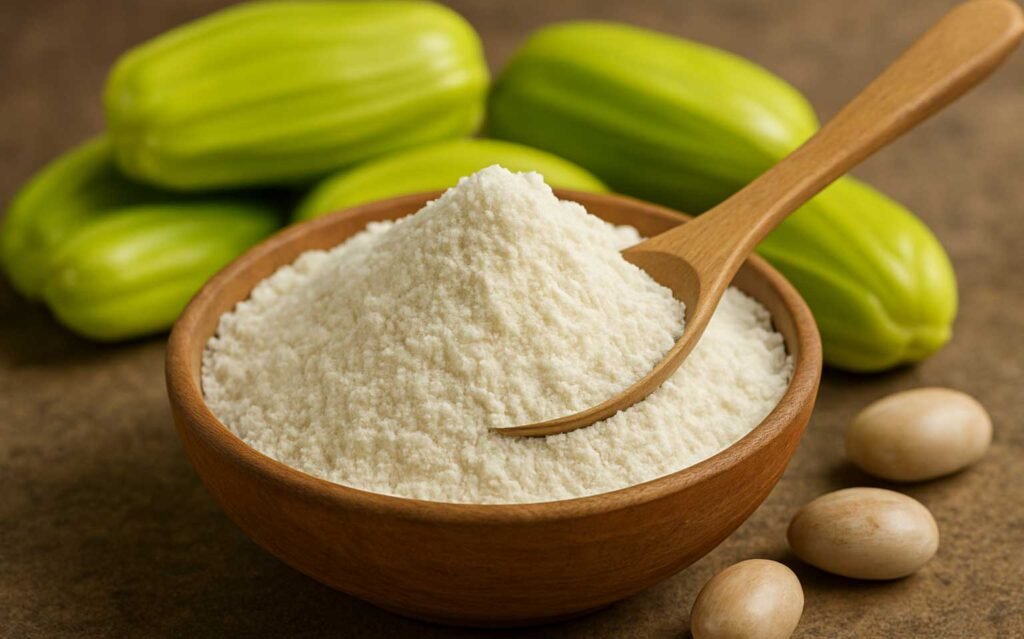
Jackfruit seeds can be dried and processed into flour.
Researchers have studied jackfruit seed flour as a potential ingredient in bakery and other food products because the seeds contain substantial starch and useful protein.
However, jackfruit seed flour doesn’t behave exactly like wheat flour.
If you’re experimenting with baking, it’s generally better to start by replacing only part of the wheat flour rather than assuming you can substitute jackfruit seed flour one-for-one.
The amount used can affect the texture, volume, and other characteristics of the finished product.
Want to experiment with jackfruit seed flour? You can find packaged jackfruit seed flour online and use it for small baking experiments rather than replacing wheat flour completely.
Is Jackfruit Seed Flour Gluten-Free?
Jackfruit seeds themselves don’t contain wheat gluten.
However, if you need to avoid gluten because of celiac disease or another medical reason, don’t assume that every packaged jackfruit seed flour is automatically safe.
Check the product label and look for appropriate gluten-free labeling or certification. Manufacturing and milling facilities can also introduce cross-contact.
How to Store Cooked Jackfruit Seeds
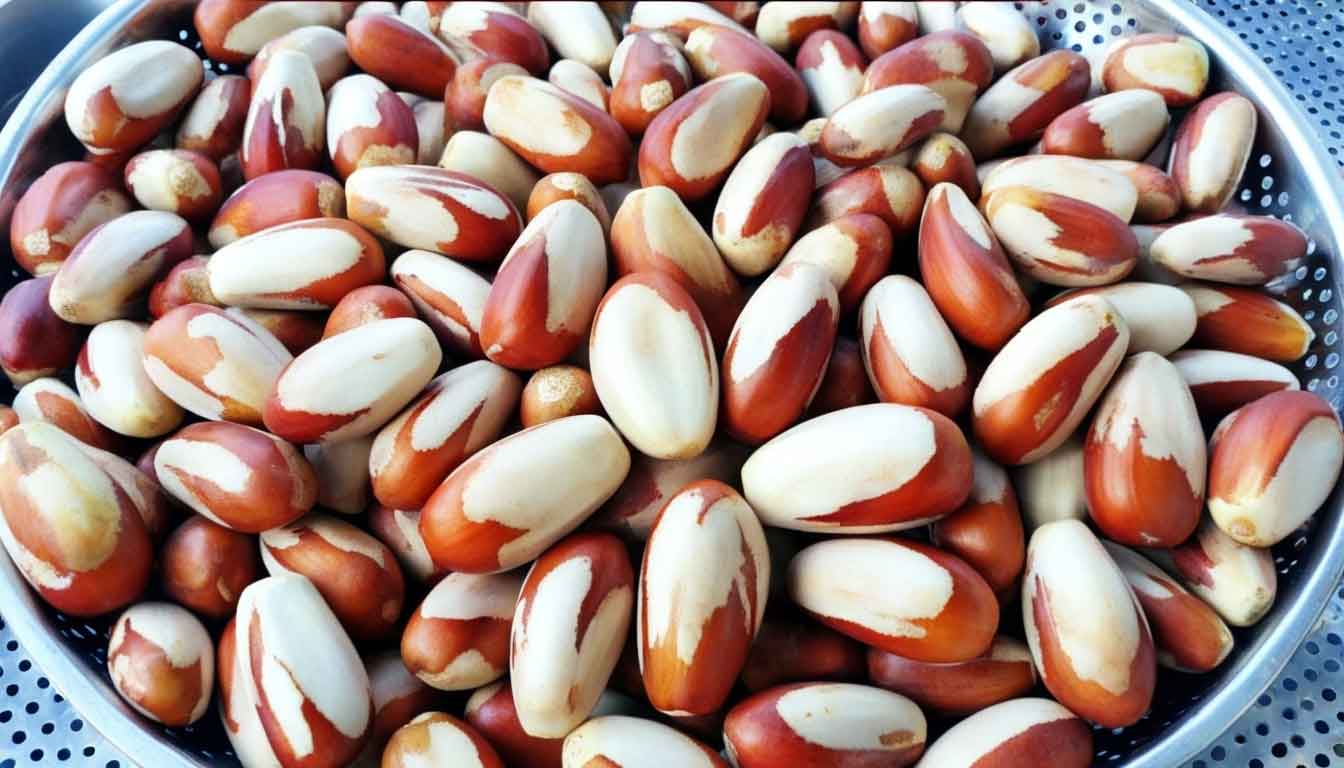
If you cook a large batch, you don’t have to eat everything immediately.
Let the cooked seeds cool appropriately and store them in a clean, covered container in the refrigerator.
For longer storage, you can freeze cooked seeds in portions and thaw them when needed.
As with other cooked foods, follow normal food-safety practices and discard leftovers if they develop an unusual smell, appearance, or texture.
Save cooked jackfruit seeds for later: Airtight food-storage containers can make it easier to refrigerate or freeze cooked seeds in individual portions.
Where to Buy Jackfruit in the U.S.
If you’re in the United States and want to try jackfruit seeds, one of the easiest options is to buy a whole fresh jackfruit and save the seeds.
Depending on where you live, fresh jackfruit may be available at:
-
Asian supermarkets
-
Indian grocery stores
-
Southeast Asian markets
-
International grocery stores
-
Specialty produce markets
-
Some larger supermarkets
You may also find frozen or packaged jackfruit products.
If you’re buying a packaged seed product, check the ingredient list and nutrition label, particularly if you’re watching added salt, sugar, or oil.
Fresh seeds that you prepare yourself give you more control over how they’re cooked and seasoned.
Potential Downsides of Jackfruit Seeds
Jackfruit seeds can be a useful food, but more isn’t necessarily better.
Antinutritional Compounds
Raw jackfruit seeds contain compounds such as tannins, phytates, and enzyme inhibitors.
These compounds can affect nutrient absorption or digestion. Processing and cooking can reduce or modify some of them.
That’s another reason to cook the seeds before eating them.
Digestive Discomfort
Eating a large amount at once may cause bloating or other digestive discomfort, particularly if you’re not accustomed to the food.
Start with a smaller portion and see how your body responds.
They Aren’t a Medicine
This is worth repeating because jackfruit health claims are often exaggerated online.
Jackfruit seeds should be considered a food, not a treatment for disease.
There isn’t enough evidence to say that they cure diabetes, cancer, high cholesterol, infections, or digestive disorders.
If you have a medical condition, follow the treatment plan provided by your healthcare professional.
What About Blood-Thinning Medications?
You may find online warnings that jackfruit seeds could increase bleeding when combined with medications such as warfarin.
That claim shouldn’t be presented as an established fact based on strong human evidence.
If you take warfarin, another anticoagulant, or a medication where dietary interactions matter, it’s sensible to ask your doctor or pharmacist before making a significant change to your diet.
Jackfruit Seeds vs. Jackfruit Flesh
The seeds and the sweet flesh have very different nutritional profiles.
Jackfruit flesh is juicy, sweet, and carbohydrate-rich. It’s commonly eaten fresh and used in desserts, smoothies, and savory dishes.
Jackfruit seeds are firmer, starchier, and less sweet. They contain protein, fiber, minerals, and various plant compounds and are generally cooked before eating.
Neither one needs to be called the “healthier” part.
They’re simply different parts of the same fruit with different culinary and nutritional uses.
Are Jackfruit Seeds a Superfood?
“Superfood” is a marketing term rather than a scientific category.
Jackfruit seeds are certainly nutritious. They provide starch, protein, fiber, minerals, and various plant compounds.
But there’s no need to turn them into a miracle food.
Their real appeal is much simpler: they’re edible, versatile, and often wasted even though they can be turned into another useful part of a meal.
What Does the Research Really Say?
This is probably the most important part of the conversation about jackfruit seeds.
Researchers have found interesting nutritional and bioactive properties in jackfruit seeds. Studies have examined their starch, protein, minerals, antioxidant compounds, and potential use in food products.
But a laboratory result isn’t the same thing as a proven health benefit in humans.
Some of the proposed therapeutic effects associated with jackfruit and its components are based primarily on laboratory or preclinical research. More human clinical research is needed before stronger health claims can be made.
That means it’s reasonable to say:
Jackfruit seeds are nutritious and contain interesting bioactive compounds.
It’s not reasonable to say:
Jackfruit seeds have been proven to prevent or treat major diseases.
That distinction makes a big difference when evaluating nutrition information online.
Frequently Asked Questions
Are Jackfruit Seeds Edible?
Yes. Jackfruit seeds are edible when properly cooked.
Can You Eat Jackfruit Seeds Raw?
It’s better to cook them first. Cooking changes their texture and can reduce some antinutritional compounds.
Are Jackfruit Seeds Healthy?
They can be a nutritious addition to a varied diet because they provide starch, protein, fiber, minerals, and plant compounds.
Are Jackfruit Seeds High in Protein?
They contain useful amounts of protein, but they aren’t a substitute for major protein-rich foods such as beans, lentils, eggs, dairy, fish, or meat.
Are Jackfruit Seeds High in Carbohydrates?
Yes. Starch is one of their main nutritional components.
Do Jackfruit Seeds Help With Weight Loss?
There isn’t enough evidence to say that jackfruit seeds cause weight loss. They can fit into a balanced diet, but they aren’t a fat-burning food.
Do Jackfruit Seeds Lower Cholesterol?
There isn’t enough human evidence to say that eating jackfruit seeds reliably lowers cholesterol.
Are Jackfruit Seeds Good for Digestion?
They contain dietary fiber and resistant starch, but there isn’t enough evidence to consider them a treatment for digestive disorders.
Can You Roast Jackfruit Seeds?
Yes. Boiling them first and then roasting them is one practical way to prepare them.
Can You Make Flour From Jackfruit Seeds?
Yes. Properly processed jackfruit seeds can be dried and ground into flour and have been studied for use in various food products.
Are Jackfruit Seeds Gluten-Free?
The seeds themselves don’t contain wheat gluten. If you need strict gluten avoidance, check packaged products for certification and cross-contact information.
How Should Cooked Jackfruit Seeds Be Stored?
Store cooked seeds in a covered container in the refrigerator, or freeze them for longer storage.
The Bottom Line
Jackfruit seeds are one of those foods that are easy to overlook.
They’re usually hidden inside a fruit that gets all the attention, yet the seeds themselves provide starch, protein, fiber, minerals, and a variety of plant compounds.
They’re also versatile. You can boil them, roast them, add them to curries, mix them into other meals, or experiment with jackfruit seed flour.
The research is interesting, but it’s important not to overstate it. Laboratory and preclinical studies have found promising properties in jackfruit and its components, but stronger claims about preventing or treating disease require much more human evidence.
For most people, the practical takeaway is simple:
Don’t throw the seeds away automatically. Cook them properly and enjoy them as one nutritious part of a varied diet.
And if you’re trying jackfruit seeds for the first time, start with a modest serving and see which preparation you enjoy most.
Sources and Further Reading
For a health and nutrition article like this, the strongest supporting material should come from peer-reviewed research and reputable medical or scientific databases.
Useful sources to consult include:
-
PubMed-indexed research on jackfruit seed composition and nutrition
-
PubMed Central articles on jackfruit seed processing and antinutritional compounds
-
Peer-reviewed reviews examining the nutritional and bioactive properties of jackfruit
-
Research on jackfruit seed flour, starch, protein, and antioxidant compounds
The evidence is most useful when it is interpreted carefully: nutritional composition is relatively well established, while many disease-related claims remain preliminary and require better human research.
Affiliate Disclosure: Some links on this page are affiliate links. If you make a purchase through them, we may earn a small commission at no extra cost to you.