Grow a Jackfruit Tree: Planting, Care, Pruning, and Harvesting Guide
Jackfruit (Artocarpus heterophyllus) is a tropical fruit tree known for its large size, evergreen foliage, and unusually large fruits. For U.S. gardeners, however, growing jackfruit successfully depends heavily on climate because the tree is sensitive to cold and does best in warm, frost-free conditions.
In the United States, jackfruit is most commonly suited to warm areas such as south Florida and Hawaii, while gardeners in colder regions may need to grow it in a container or protected environment. UF/IFAS notes that jackfruit grows best in continuously warm conditions and that cold temperatures can damage or kill the tree.
This guide covers the practical basics of growing jackfruit, including climate, planting, soil, watering, sunlight, fertilizing, pruning, pest management, and harvesting. It also explains what U.S. gardeners should consider before planting a jackfruit tree in their yard.
Understanding the Jackfruit Tree
Jackfruit is an evergreen tropical tree in the mulberry family (Moraceae). It is native to South Asia and is now grown in tropical and subtropical regions around the world.
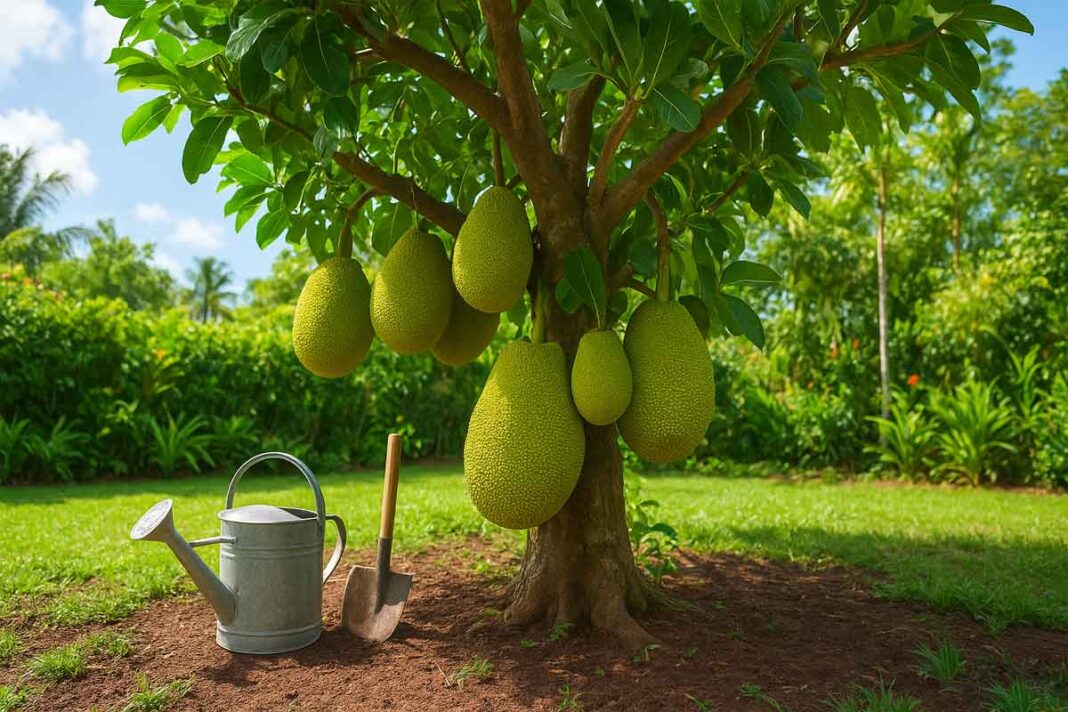
One of its most unusual features is the size of its fruit. Jackfruit produces the largest tree-borne fruit, and individual fruits can become very large depending on the variety and growing conditions.
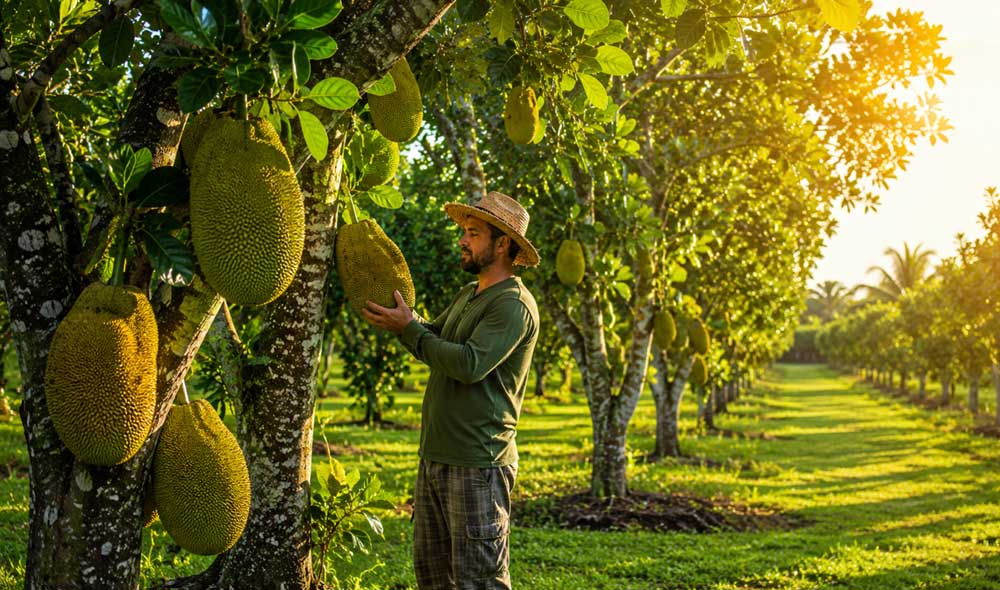
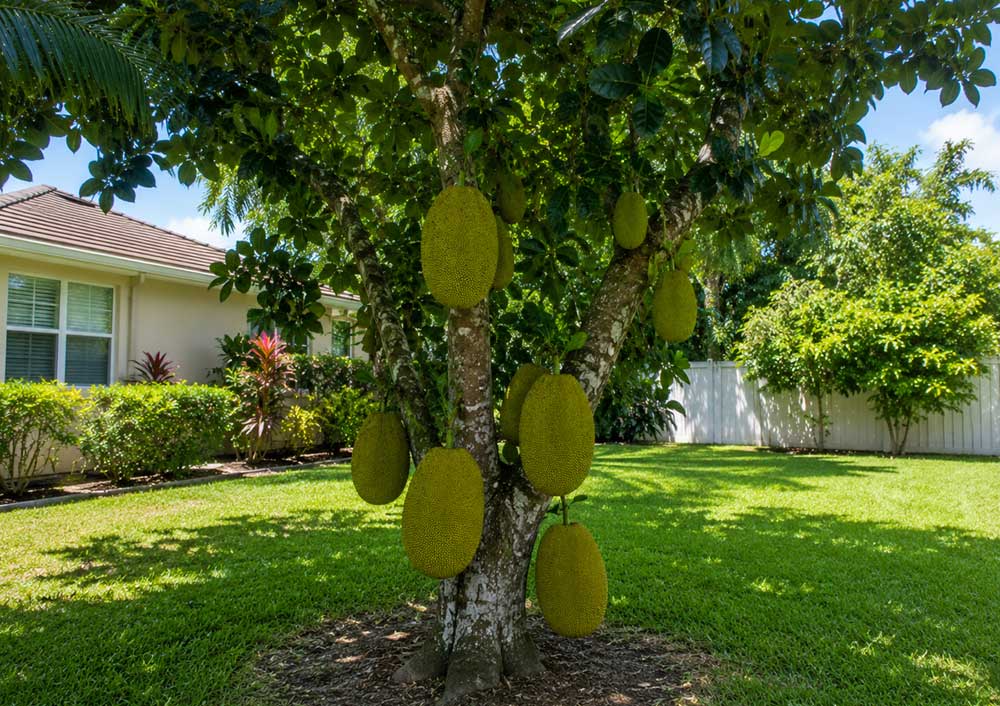
The tree has a dense canopy of glossy green leaves, and fruits can develop on the trunk and larger branches. In warm climates with suitable soil, water, and sunlight, jackfruit can become a substantial landscape tree.
For U.S. home gardeners, the biggest consideration is climate. Jackfruit is not a cold-hardy tree and is best suited to areas where freezing temperatures are uncommon.
Jackfruit Tree Size and Characteristics
A mature jackfruit tree can develop a broad, dense canopy and remain evergreen in suitable climates. The leaves are dark green, glossy, and leathery, while the trunk and larger branches can produce flowers and fruit.
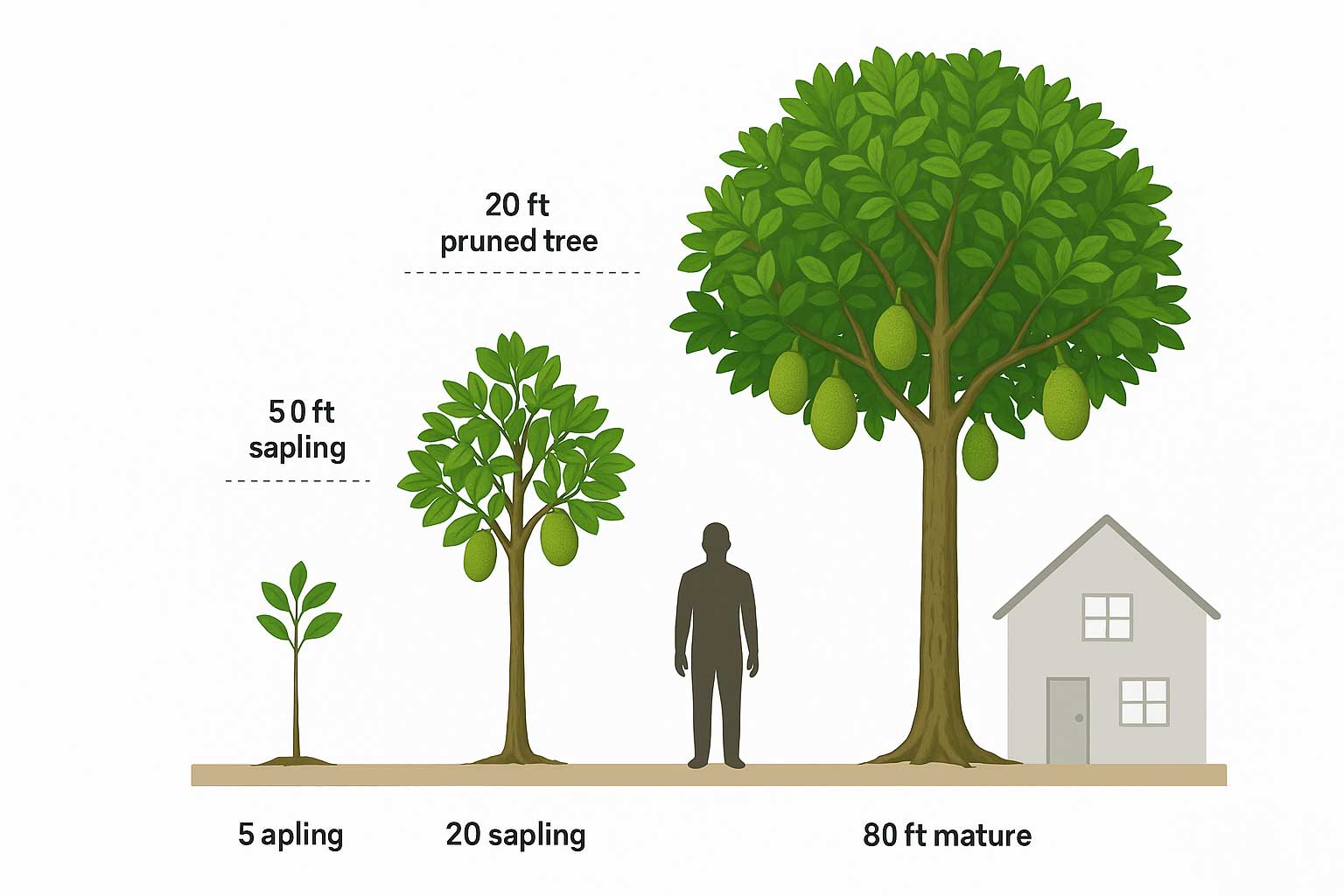
Tree size varies with variety, climate, soil, and pruning. In Florida, UF/IFAS describes jackfruit trees commonly reaching about 30 to 40 feet, although trees can become larger under favorable conditions.
Regular selective pruning can help keep a backyard tree at a more manageable size. UF/IFAS guidance notes that jackfruit responds well to pruning and can be maintained at around 15 feet with annual selective pruning in suitable conditions.
Growing Zones and Climate
Where Can You Grow Jackfruit in the USA?
Jackfruit is a tropical tree and needs consistently warm conditions. In the United States, it is best suited to warm, frost-free areas, particularly south Florida and Hawaii.
Jackfruit is highly sensitive to cold. UF/IFAS reports that leaves can be damaged around 32°F (0°C), branches around 30°F (-1°C), and the tree may be killed at about 28°F (-2°C).
Ideal Growing Conditions
- Climate: Warm and humid or warm subtropical
- Sunlight: Full sun
- Soil: Well-drained soil
- Water: Regular moisture, especially while young and during prolonged dry periods
- Cold protection: Important in areas where freezes can occur
If you live outside a warm growing region, growing jackfruit in a large container or a protected greenhouse environment may be more practical than planting it permanently outdoors.
A south-facing location can provide a warmer microclimate, but it does not make jackfruit frost-hardy. In areas with regular freezing temperatures, outdoor production may not be reliable.
Grow a young or grafted jackfruit tree in a large container if your climate requires you to move the plant indoors or into a protected area during cold weather.
Jackfruit Tree Height and Growth
How Tall Does a Jackfruit Tree Get?
Jackfruit trees can become large, but their final size depends on the variety, climate, growing conditions, and pruning.
For a home landscape, planning for a substantial tree is important. UF/IFAS describes jackfruit trees in Florida as commonly reaching about 30–40 feet, while regular pruning can keep a tree much smaller.
A practical planting guideline is to give the tree plenty of room from buildings, other large trees, and power lines.
How Fast Does Jackfruit Grow?
Jackfruit can grow relatively quickly when it receives enough warmth, sunlight, water, and nutrients. Young trees need consistent care while they establish their root systems.
Fruit production also varies. Some trees can begin producing within a few years under favorable conditions, while seed-grown trees and different cultivars may take longer.
Tips for Cultivating
To successfully grow a jackfruit tree, consider the following tips:
Soil Requirements
Jackfruit trees need soil that drains well. Poor drainage and prolonged wet conditions can cause serious problems for the roots.
Choose a planting site where water does not remain around the tree after rain. Sandy, sandy-loam, and other well-drained soils can work well.
When planting a nursery tree, avoid planting it too deeply. The top of the original root ball should be level with or slightly above the surrounding soil.
For heavy or poorly drained sites, improving drainage is more important than simply adding large amounts of compost to the planting hole.
::`
UF/IFAS specifically warns that jackfruit does not tolerate continuously wet/flooded soil and recommends careful planting depth.
Water Requirements
Young jackfruit trees need regular watering while they establish their root systems. During hot or dry periods, check the soil regularly and water when needed rather than allowing the young tree to remain dry for long periods.
Established trees are moderately drought tolerant, but prolonged dry weather can reduce growth and fruit production. Water is especially important during flowering and fruit development.
Avoid keeping the soil constantly wet. Jackfruit does not tolerate prolonged flooding or waterlogged conditions.
Helpful for Young Trees
Young jackfruit trees need regular watering while they establish. A hose with an adjustable spray nozzle can make it easier to water the root zone without disturbing the soil.
→ See garden hose nozzles on Amazon
Sunlight
Jackfruit trees thrive in full sun, requiring at least 6 to 8 hours of direct sunlight daily. When planting your tree, choose a location that receives plenty of sunlight, as this will promote healthy growth and maximize fruit production.
Fertilizer
Jackfruit trees benefit from regular fertilization during active growth, but the best fertilizer program depends on the soil, tree age, growing region, and cultivar.
Instead of applying a high-nitrogen fertilizer automatically, consider using a fertilizer appropriate for tropical fruit trees and follow the product label for the correct rate and timing.
In Florida, UF/IFAS recommends specific fertilizer programs for jackfruit that vary with tree age and growing conditions. Home gardeners should consider a soil test and local extension recommendations when developing a long-term fertilizer plan.
Pruning
Pruning can help keep a jackfruit tree at a manageable size and make harvesting easier.
Remove dead, damaged, or poorly positioned branches, and selectively reduce strong upright growth when necessary. Avoid removing large amounts of healthy growth at one time.
For a backyard tree, regular light pruning is generally more practical than allowing the tree to become very large and attempting heavy pruning later.
UF/IFAS notes that jackfruit responds well to pruning and can be maintained at a smaller size with annual selective pruning.
Helpful Tool for Jackfruit Tree Care
Regular pruning can help keep a jackfruit tree at a manageable size and make harvesting easier. A sturdy pair of bypass pruning shears is useful for removing small shoots and unwanted growth.
→ Check pruning shears on Amazon
For larger branches that are too thick for hand pruners, a pruning saw may be more appropriate. Choose a tool designed for tree and branch pruning rather than using a standard household saw.
→ See tree pruning saws on Amazon
Growing Jackfruit in the USA
Jackfruit can be grown in the United States, but location matters more than almost any other factor.
Where Does Jackfruit Grow Best?
The most suitable U.S. locations are warm, frost-free areas, particularly south Florida and Hawaii. Some other warm microclimates may support jackfruit, but gardeners should check their local winter temperatures before planting a tree outdoors.
What Does a Jackfruit Tree Need?
For healthy growth, provide:
- Full sun
- Well-drained soil
- Regular water during establishment
- Protection from freezing temperatures
- Enough space for the mature canopy
- Pruning when necessary to control size
Jackfruit is not a good choice for a typical cold-winter garden. If your area regularly experiences freezing temperatures, consider a container-grown tree or protected growing environment instead.
Before buying a tree, check your local USDA hardiness zone, historical winter temperatures, and local university Extension recommendations.
How to Plant a Jackfruit Tree
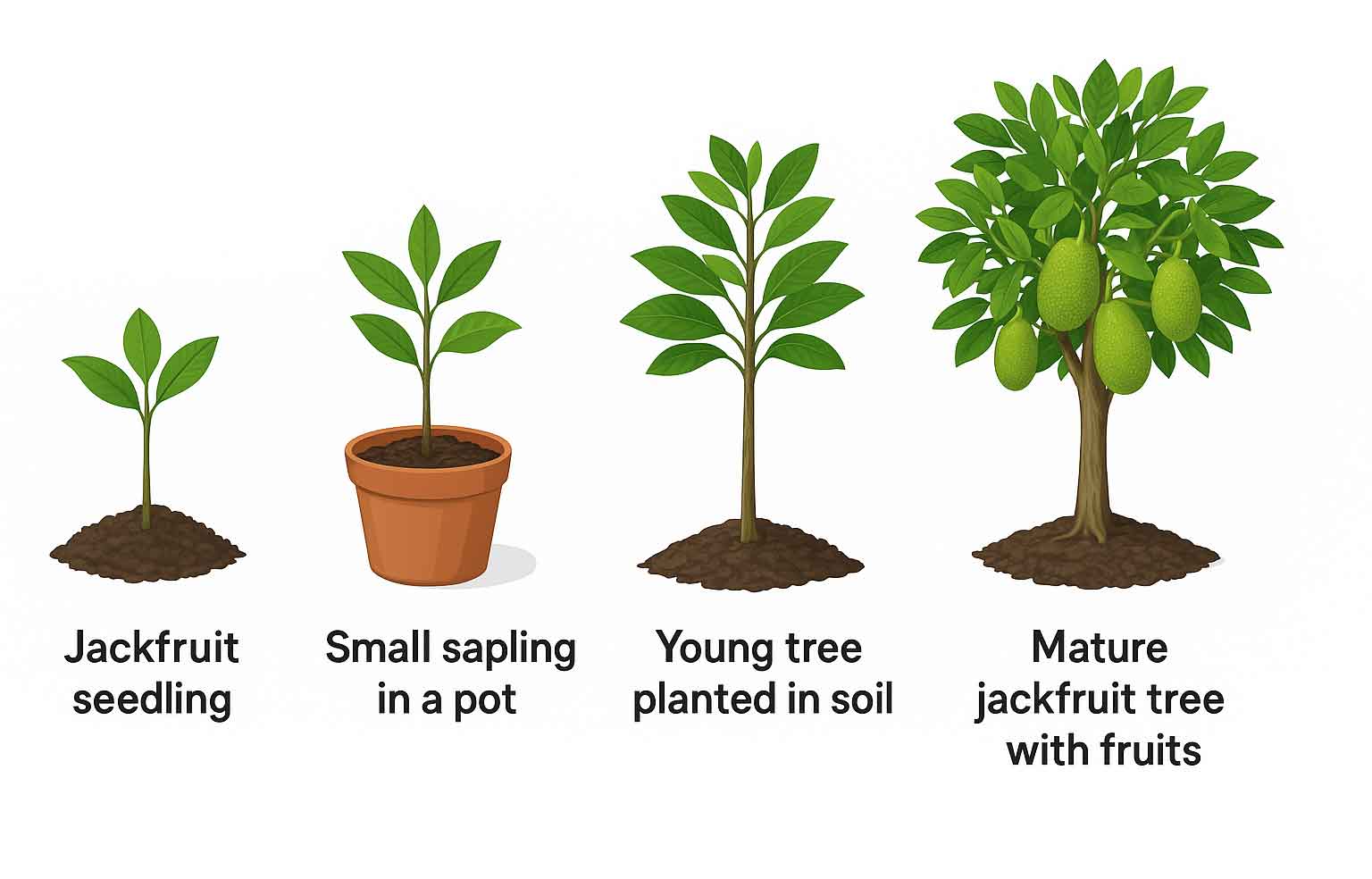
When planting a jackfruit tree, choose the location carefully because moving an established tree is difficult.
1. Choose the Right Location
Select a warm, sunny location with good drainage. Keep the tree away from buildings, power lines, and other large trees.
For a full-size landscape tree, allow substantial space for future growth. UF/IFAS recommends planting jackfruit about 25–30 feet away from other trees and buildings in the home landscape.
2. Prepare the Planting Hole
Prepare a hole wider than the root ball so the roots can establish into the surrounding soil. Avoid planting the tree too deeply.
The top of the original soil/root-ball level should be level with or slightly above the surrounding ground.
3. Water After Planting
Water the tree thoroughly after planting. Continue regular irrigation while the young tree becomes established, especially during dry weather.
4. Protect the Trunk
Keep lawn equipment such as string trimmers and mowers away from the trunk. Mechanical damage can weaken a young fruit tree.
Do You Need to Stake a Young Jackfruit Tree?
Staking is optional in many situations, but a young tree may benefit from temporary support if it is exposed to strong winds or has an unstable root ball.
If you stake a tree, use a soft, flexible tie rather than wire or anything that can cut into the trunk as it grows.
→Check tree support stakes on Amazon
Pest and Disease Management
Jackfruit trees can experience pest and disease problems, although serious problems may be limited in suitable growing conditions.
Inspect the leaves, shoots, trunk, flowers, and developing fruit regularly. Look for unusual spots, damaged leaves, insects, or signs of fruit damage.
Good drainage, adequate sunlight, proper watering, and regular monitoring can help reduce many common problems.
If a serious pest or disease appears, identify the problem before applying a treatment. Local university Extension services can provide region-specific recommendations for identification and management.
Harvesting Jackfruit
When Is Jackfruit Ready to Harvest?
Knowing when to harvest jackfruit can take some practice because the outside of the fruit does not always change dramatically.
Signs of maturity can include a slight change in skin color, flatter-looking spines, and other changes in the fruit’s appearance and aroma. The exact signs can vary by cultivar.
Jackfruit may take several months to develop after flowering, so keeping track of flowering and fruit development can help estimate harvest timing.
How to Harvest Jackfruit
Jackfruit contains sticky latex, so harvesting and cutting the fruit can be messy.
Use a clean, sharp knife to cut the fruit from the tree while avoiding unnecessary damage to the branch. Wear suitable gloves or protect your hands and tools with a small amount of cooking oil if needed to make the latex easier to handle.
Because jackfruit can become very large and heavy, use extra care when harvesting fruit from higher branches.
Culinary Uses
Jackfruit can be used at different stages of ripeness.
Ripe jackfruit has sweet, tropical flesh and can be eaten fresh or used in smoothies and desserts.
Young green jackfruit has a mild flavor and fibrous texture. It is commonly cooked with sauces and spices and can be used in tacos, sandwiches, curries, and other savory dishes.
If you want more recipe ideas, see our Jackfruit Recipes guide.
Conclusion
Growing a jackfruit tree can be rewarding, but it is not suitable for every U.S. garden. The tree needs warmth, full sun, good drainage, regular care while young, and enough space to develop.
For gardeners in warm areas such as south Florida and Hawaii, jackfruit can be a productive tropical fruit tree when the growing conditions are right. Gardeners in colder parts of the country may need to consider container growing or a protected environment.
Before planting, check your local winter temperatures, available growing space, drainage, and local Extension recommendations. Choosing the right location and a suitable nursery tree can make a major difference in the long-term success of your jackfruit tree.
Choosing a Jackfruit Tree to Plant
If you are buying a jackfruit tree for your yard, look for a healthy nursery-grown plant from a reputable local or regional nursery.
Before purchasing, ask about:
- The cultivar or variety
- Expected mature size
- Whether the tree was grown from seed or propagated from a selected cultivar
- Cold tolerance and suitability for your area
- Expected fruit characteristics
- Local planting recommendations
A healthy, appropriately sized nursery tree is generally a better starting point than choosing a plant simply because it is already large.
Can You Grow a Jackfruit Tree in a Container?
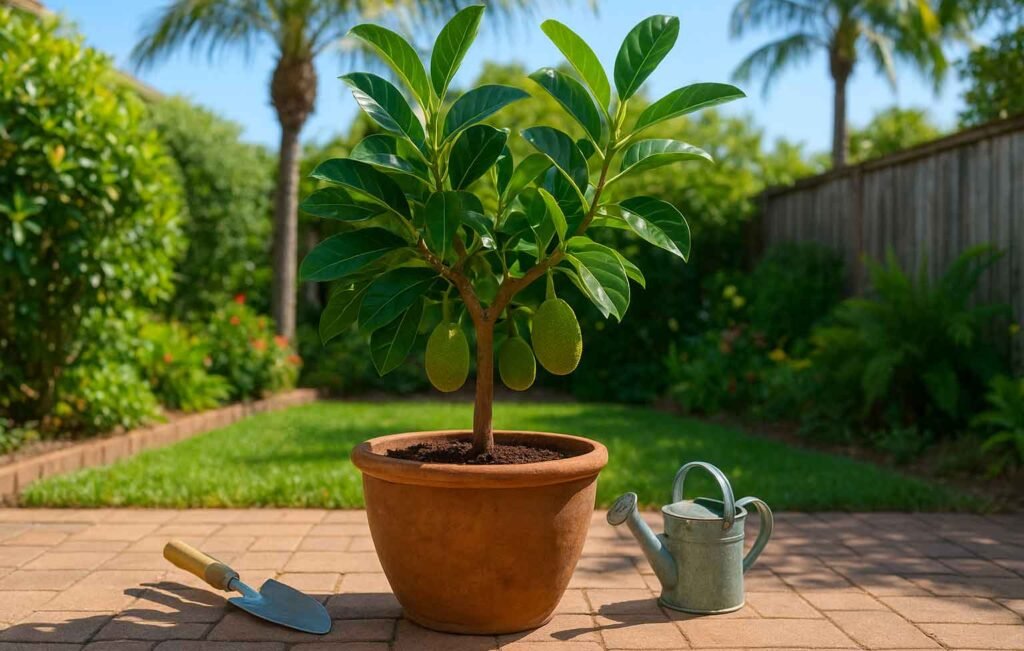
Yes, jackfruit can be grown in a container while the tree is young, which can be useful for gardeners who need to protect it from cold weather.
Choose a large container with good drainage and use a well-draining growing medium. Place the tree where it receives plenty of sunlight during the growing season.
Container-grown jackfruit trees still need regular watering and nutrition, and they will eventually become difficult to manage if allowed to grow too large.
In colder climates, container growing may make it easier to move a young tree into a protected location during freezing weather. However, jackfruit is naturally a large tree, so long-term container growing requires regular pruning and careful management.
Growing Jackfruit in a Container?
Jackfruit develops a strong root system, so choose a large container with good drainage rather than keeping the tree in a small nursery pot.
→See large plant containers on Amazon
Sources & Further Reading
- University of Florida IFAS Extension — Jackfruit Growing in the Florida Home Landscape
- UF/IFAS Extension Miami-Dade County — Tropical Fruit Factsheet: Jackfruit
Affiliate Disclosure: Some links on this page are affiliate links. If you purchase through these links, we may earn a commission at no additional cost to you.