Jackfruit Farming Profit in the US: Complete Guide to Growing a Profitable Tropical Fruit Business
Jackfruit farming profit in the US: A few years ago, very few farmers in the United States considered jackfruit a serious commercial crop. Today, that is changing quickly. As demand for vegan foods, tropical fruits, and healthy plant-based products continues to grow, more growers are exploring jackfruit farming as a profitable long-term business.
From farmers markets in Florida to specialty grocery stores in California, jackfruit is gaining attention for its unique texture, nutritional value, and high market potential. Restaurants and food brands are also using young jackfruit as a plant-based meat substitute, creating new opportunities for farmers across warm regions of the country.
If you are interested in starting a profitable tropical fruit farming business this complete guide will help you understand everything about jackfruit farming profit in the US, including climate requirements, farming methods, costs, expected income, marketing ideas, and practical tips for success.
Know about Jackfruit?
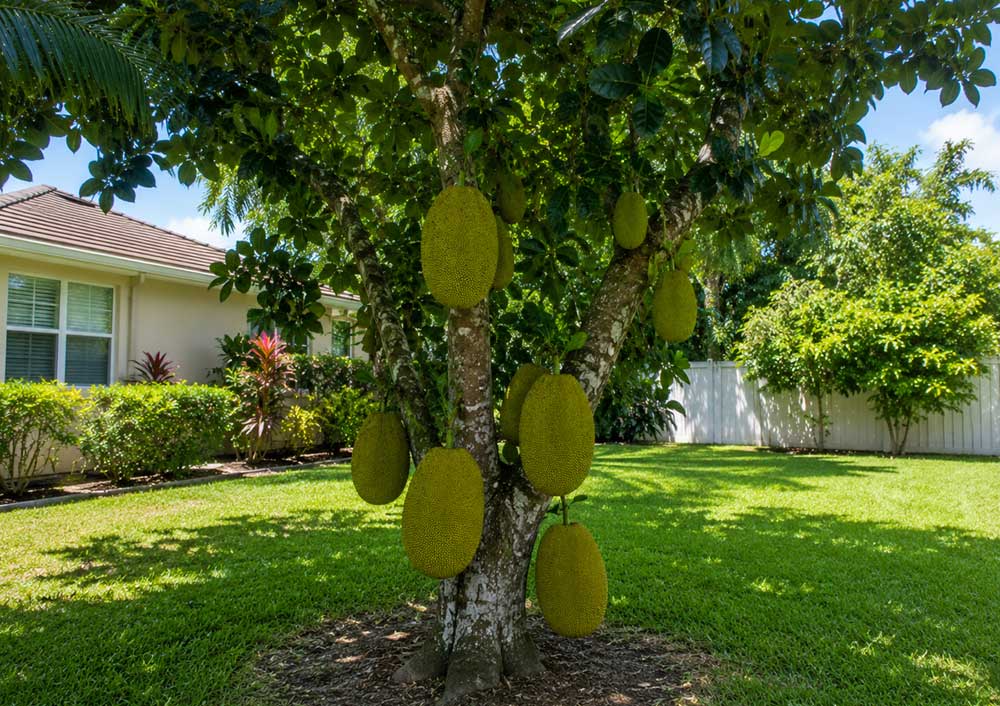
Jackfruit is the world’s largest fruit grown on a tree. Some fruits can weigh more than 50 pounds, while mature trees can produce hundreds of fruits every year.
Jackfruit has a naturally sweet flavor when ripe, while young green jackfruit has a texture similar to pulled meat. Because of this, it has become extremely popular in vegan and vegetarian cooking.
In the United States, jackfruit is now commonly sold in:
- Asian grocery stores
- Organic supermarkets
- Farmers markets
- Vegan restaurants
- Health food stores
This rising demand is one of the biggest reasons why jackfruit farming profit in the US is attracting attention from small farmers and commercial growers alike.
Once considered an uncommon tropical fruit in America, jackfruit is now becoming a favorite among health-conscious consumers and vegan food brands.
Why Jackfruit Farming Is Becoming Popular in the US
American consumers are becoming more interested in healthy eating, sustainable farming, and exotic fruits. Jackfruit fits perfectly into these trends.
This is why many farmers are now exploring jackfruit farming profit in the USA as a long-term agricultural opportunity.
Here are some major reasons why jackfruit farming is growing in popularity:
Rising Demand for Plant-Based Foods
Young jackfruit is widely used as a meat substitute in tacos, sandwiches, curries, and barbecue dishes.
Premium Market Prices
Fresh tropical fruits often sell at higher prices compared to traditional crops.
Long-Term Production
A healthy jackfruit tree can continue producing fruit for decades.
Multiple Income Sources
Farmers can sell:
- Fresh fruit
- Frozen jackfruit
- Chips
- Flour
- Seeds
- Vegan food products
Climate-Friendly Crop
Jackfruit trees tolerate heat better than many traditional fruit crops.
Because of these benefits, many farmers now see jackfruit as a smart option for profitable tropical fruit farming in the USA.
Jackfruit Farming Profit US: Is It Really Worth It?
Yes, jackfruit farming can be highly profitable when managed properly.
Although the trees require patience during the early years, mature orchards can generate impressive income through both fresh fruit sales and processed products.
Estimated Profit Potential Per Acre
Profit potential varies depending on climate, orchard management, market access, and product pricing, but commercial growers can still achieve strong long-term returns.
| Item | Estimated Value |
| Average Yield | 18–30 tons per acre |
| Selling Price | $1–$3 per pound |
| Gross Revenue | $40,000–$120,000 per acre |
| Annual Expenses | $10,000–$30,000 |
| Potential Net Profit | $25,000–$80,000+ |
Actual profit depends on:
- Climate
- Tree variety
- Farming practices
- Market access
- Product quality
- Processing methods
Farmers who create value-added products usually earn much higher profits than those selling only raw fruit.
For many growers, jackfruit farming profit US depends heavily on local market demand and value-added processing.
Best States for Jackfruit Farming in America
Jackfruit grows best in warm tropical and subtropical regions where frost is rare.
Top Locations for Commercial Jackfruit Farming
Florida
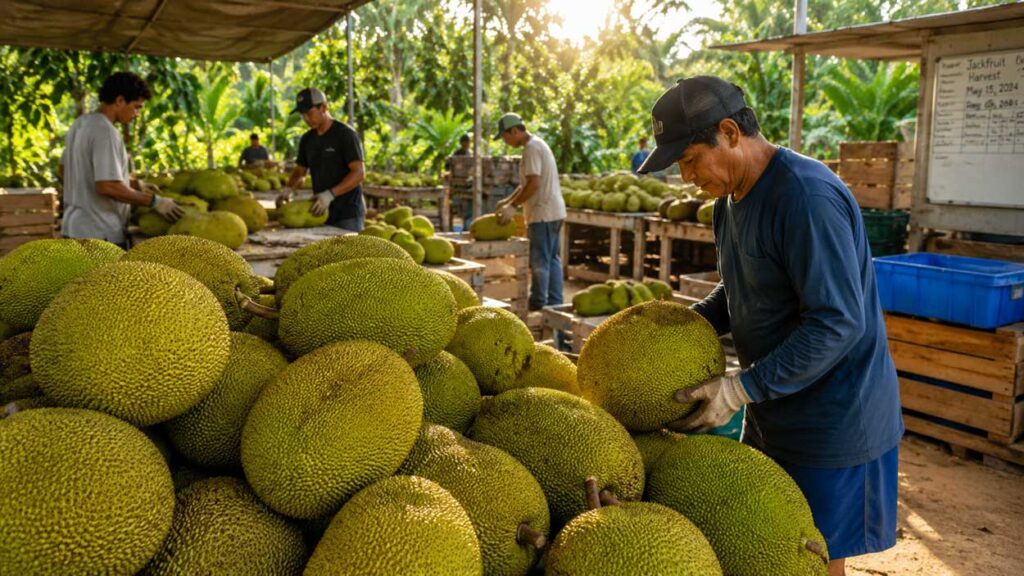
Florida is currently one of the best states for jackfruit cultivation in the US because of:
- Warm temperatures
- High humidity
- Strong tropical fruit market
- Access to export buyers
Hawaii
Excellent climate for year-round tropical fruit production.
Southern California
Some coastal and protected areas can support jackfruit farming successfully.
Southern Texas
Warm southern regions show growing potential for tropical fruit farming.
Puerto Rico
Ideal climate and long growing season for commercial orchards.
Best Climate for Jackfruit Farming
Jackfruit trees thrive in hot and humid conditions.
Ideal Growing Conditions
| Factor | Ideal Requirement |
| Temperature | 70°F–95°F |
| Rainfall | 40–100 inches annually |
| Soil Type | Well-drained sandy loam |
| Soil pH | 5.5–6.5 |
| Sunlight | Full sunlight |
Young trees are sensitive to frost, so cold protection is important during the early stages.
Best Jackfruit Varieties for Commercial Farming
Choosing the right variety is important for maximizing jackfruit farming profit US.
Black Gold
- High yield potential
- Excellent fruit quality
- Popular commercial variety
Lemon Gold
- Sweet flavor
- Attractive color
- Good for fresh fruit markets
Golden Nugget
- Smaller fruit size
- Easy harvesting
- Reliable producer
Dang Rasimi
- Large fruits
- Strong commercial demand
- Productive trees
Farmers should select varieties based on local climate and market demand.
How to Start a Jackfruit Farming Business
Starting a jackfruit farm requires planning, patience, and proper land preparation.
-
Choose the Right Location
The farming site should have:
- Full sunlight
- Good drainage
- Warm weather
- Wind protection
Avoid areas that experience frost or standing water.
-
Prepare the Soil
Jackfruit trees prefer fertile and well-drained soil rich in organic matter.
Before planting:
- Add compost or aged manure
- Improve drainage if necessary
- Test soil pH levels
Healthy soil improves tree growth and fruit quality.
-
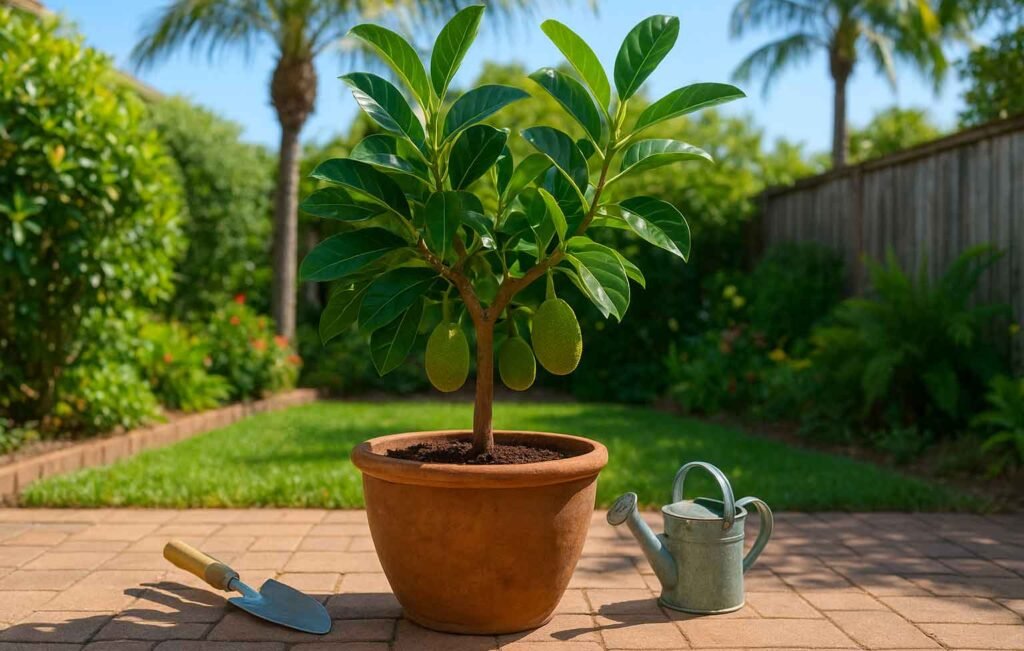
Use Grafted Plants
Commercial growers usually prefer grafted jackfruit plants because they:
- Produce fruit earlier
- Grow more uniformly
- Provide predictable fruit quality
Seed-grown trees are cheaper but take longer to bear fruit.
-
Proper Tree Spacing
Jackfruit trees become very large over time.
Recommended Spacing
- Standard orchards: 25–30 feet apart
- High-density systems: 20 feet apart with regular pruning
Good spacing improves sunlight exposure and airflow.
For successful plantation, farmers often use quality gardening tools and soil testing kits available on Amazon.
🛒 Products :
Water and Irrigation Requirements
Young jackfruit trees need regular watering to establish strong roots.
Irrigation Tips
- Water deeply once or twice per week
- Use drip irrigation for efficiency
- Avoid waterlogged soil
- Apply mulch to conserve moisture
During hot summers, irrigation helps improve fruit size and overall production.
Drip irrigation systems available on Amazon help maintain consistent moisture and improve fruit yield.
🛒 Products:
Fertilizer Requirements for Healthy Growth
Jackfruit trees are heavy feeders and respond well to balanced nutrition.
Recommended Fertilizers
Use:
- Organic compost
- Well-rotted manure
- Balanced NPK fertilizer
Apply fertilizer every 6–8 weeks during the growing season.
Organic farming methods are especially attractive for premium tropical fruit markets.
Organic compost bags and gardening fertilizers can be easily sourced online from Amazon.
🛒 Products:
Pruning and Orchard Management
Proper pruning keeps trees healthy and manageable.
Benefits of Pruning
- Better air circulation
- Improved sunlight penetration
- Easier harvesting
- Reduced disease risk
Remove:
- Dead branches
- Diseased growth
- Crowded limbs
Maintaining tree height also makes harvesting safer and more efficient.
Common Pests and Diseases
Jackfruit trees are relatively hardy compared to many fruit crops, but some pests and diseases can still cause problems.
Common Pests
- Fruit borers
- Bark borers
- Fruit flies
Common Diseases
- Root rot
- Leaf spot
- Fruit rot
Prevention Tips
- Use neem oil sprays
- Improve drainage
- Remove infected fruit
- Keep orchards clean
- Avoid overwatering
Integrated pest management helps reduce chemical use and supports sustainable farming.
How Long Does It Take to Produce Fruit?
| Tree Type | Fruiting Time |
| Grafted Trees | 3–5 years |
| Seed-Grown Trees | 6–8 years |
Grafted plants are generally the best choice for commercial farming because they generate income faster.
Average Yield Per Tree
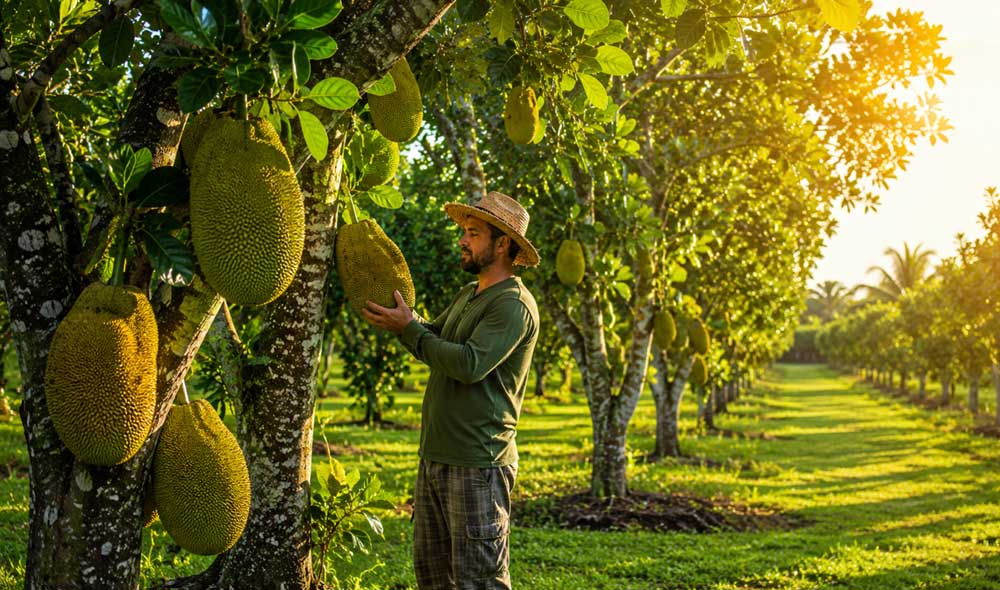
A mature jackfruit tree can produce:
- 100–250 fruits annually
- More than 500 pounds of fruit per year
Production usually increases as trees mature.
With proper care, a well-managed orchard can remain productive for many years.
Value-Added Products That Increase Profit
One reason jackfruit farming profit in the US is growing rapidly is because processed products often sell for premium prices.
Most Profitable Jackfruit Products
Fresh Jackfruit
Sold through grocery stores, local markets, and direct farm sales.
Vegan Meat Products
Young jackfruit is widely used in plant-based foods.
Jackfruit Chips
Popular healthy snack product.
Frozen Jackfruit
Strong demand in ethnic and vegan food markets.
Jackfruit Flour
Made from seeds and used in gluten-free recipes.
Jams and Desserts
Excellent for specialty food businesses.
Many successful growers combine farming with food processing for higher profit margins.
Can Jackfruit Farming Work for Small Farms?
Yes. Small farms can do very well with jackfruit farming, especially when selling directly to consumers.
Many small growers increase profits through:
- Farmers markets
- Organic branding
- Direct online sales
- Agritourism
- Specialty vegan products
Because jackfruit is still considered exotic in many parts of America, local growers often have less competition.
Sustainability Benefits of Jackfruit Farming
Jackfruit farming is also environmentally friendly.
Why It’s a Sustainable Crop
- Heat tolerant
- Drought resistant
- Long lifespan
- Fewer pesticide requirements
- Suitable for agroforestry systems
As climate conditions continue changing, tropical fruit farming may become more important in warmer parts of the United States.
Challenges of Jackfruit Farming in the US
Like every agricultural business, jackfruit farming also has challenges.
Main Challenges
- Sensitivity to frost
- Long waiting period before full production
- Large tree size
- Heavy fruits require careful harvesting
- Limited consumer awareness in some areas
However, demand continues to rise, especially in vegan and health-focused markets.
Tips to Maximize Jackfruit Farming Profit US
Farmers who focus on quality and smart marketing usually achieve the best results.
Practical Tips for Higher Profits
- Choose grafted varieties
- Install drip irrigation
- Focus on organic production
- Sell directly to consumers
- Produce value-added products
- Build a local brand
- Partner with vegan restaurants
- Start small and scale gradually
Diversifying income sources can significantly improve long-term profitability.
Common Mistakes New Jackfruit Farmers Make
- Overwatering young trees
- Planting in poorly drained soil
- Choosing seed-grown plants instead of grafted varieties
- Ignoring frost protection
- Planting trees too close together
Avoiding these mistakes can improve long-term yield and profitability.
Final Thoughts – Jackfruit Farming Profit in the US
Jackfruit farming profit in the us may still be considered a niche business in the United States, but the market is growing rapidly. Consumers are actively searching for healthy, sustainable, and plant-based food options, and jackfruit fits perfectly into that trend.
For farmers willing to invest time and patience, jackfruit farming can become a profitable long-term business with multiple income opportunities. From fresh fruit sales to processed vegan products, the earning potential continues to expand every year.
With the right climate, proper management, and smart marketing, jackfruit farming profit in the US can be extremely rewarding for both small growers and commercial orchards.
In parts of Florida, some small growers are already earning premium prices by selling fresh jackfruit directly through farmers markets and specialty food stores.
FAQs about Jackfruit Farming Profit in the US
Is jackfruit farming profitable in the US?
Yes. Many farmers earn strong profits through fresh fruit sales and value-added products like chips, frozen jackfruit, and vegan foods.
How much land is needed for jackfruit farming?
Even small farms can grow jackfruit successfully. Commercial orchards usually require at least 1–5 acres for larger-scale production.
Which US state is best for jackfruit farming?
Florida is currently one of the best locations because of its warm tropical climate and strong specialty fruit market.
Can jackfruit grow in greenhouses?
Yes. In cooler climates, growers can use large greenhouses to protect young trees from frost.
How long does a jackfruit tree take to produce fruit?
Grafted trees usually begin fruiting within 3–5 years, while seed-grown trees may take 6–8 years.
What is the average profit from jackfruit farming?
Depending on yield, pricing, and product processing, profits can range from $25,000 to over $80,000 per acre annually.
Profit estimates may vary depending on climate, local market prices, farming practices, and orchard management.