The Safest Way to Cut Unripe Jackfruit in the US — Easy Guide for Beginners
The Safest Way to Cut Unripe Jackfruit : If you’ve ever stood in front of a huge jackfruit at a grocery store wondering how on earth you’re supposed to cut it — you’re not alone. Jackfruit is the largest fruit in the world, and its sticky sap and thick skin make it a challenge, especially if you’ve never handled it before.
In the US, jackfruit is becoming more popular, especially unripe (green) jackfruit, which is used as a plant-based meat alternative in tacos, BBQ sandwiches, curries, and stir-fries. But before you can enjoy it, you need to know the safest way to cut unripe jackfruit without hurting yourself or getting covered in sticky latex sap.
This guide breaks the process down into simple steps so you can prepare jackfruit safely, cleanly, and confidently right in your kitchen.
What Is Jackfruit?
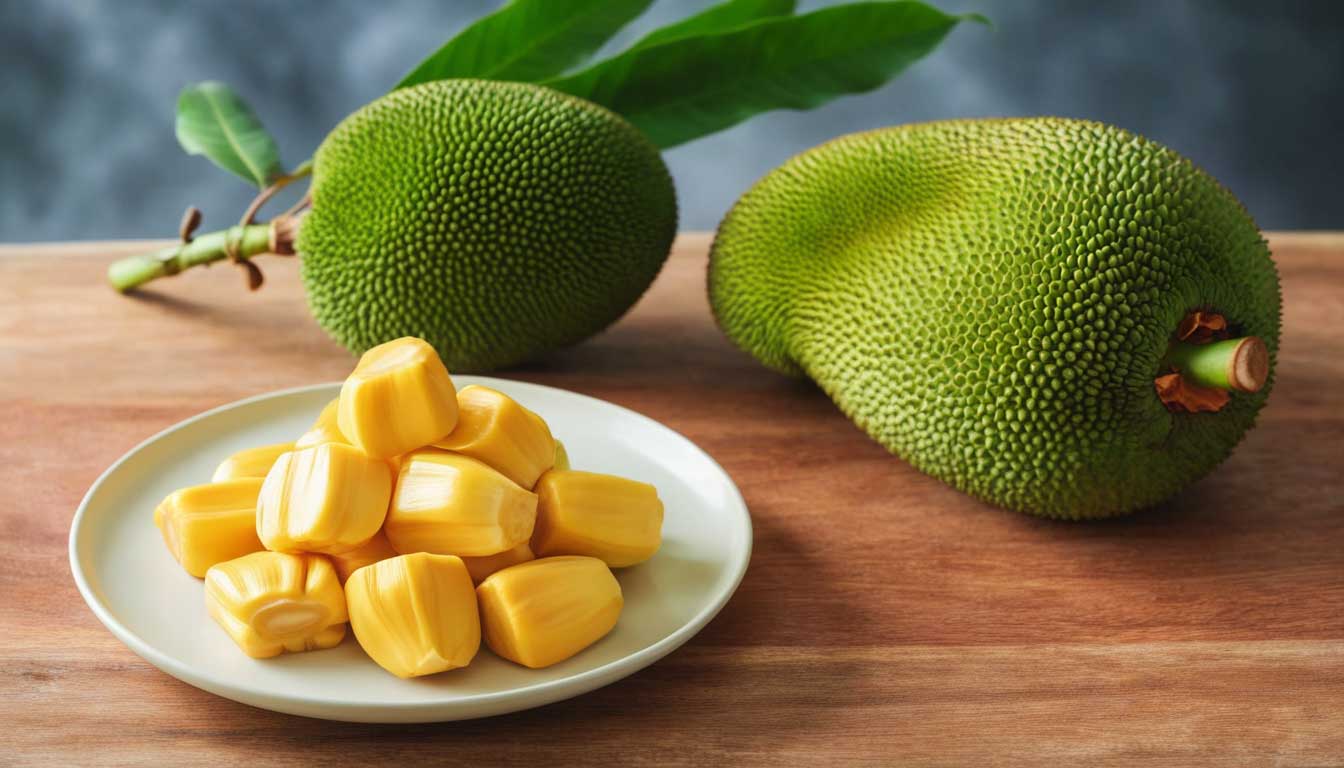
Jackfruit is a giant tropical fruit native to Southeast Asia. It has:
A thick, bumpy outer skin
A sticky white sap called latex
Dozens of fruit pods inside
Large, edible seeds
When the jackfruit is ripe, the fruit tastes sweet, like a mix of pineapple and mango.
When it’s unripe, the texture is meaty and perfect for savory dishes.
People in Laos, Thailand, India, Sri Lanka, and many other countries eat jackfruit regularly, both ripe and unripe. In the US, most people buy unripe jackfruit for cooking vegan dishes.
Supplies You Need Before Cutting Jackfruit -The Safest Way to Cut Unripe Jackfruit
Because jackfruit is big, heavy, and sticky, prepping correctly makes everything easier.
Here’s what you’ll need:
✔ A large, sharp knife
A sturdy butcher knife works best. Jackfruit has a thick skin and dense core.
✔ Cooking oil
Rub oil on your knife and hands to prevent sap from sticking.
✔ Gloves (optional but recommended)
Latex sap is extremely sticky. Gloves help keep your hands clean.
✔ Large cutting board and plenty of counter space
You’ll need room to maneuver.
✔ A trash bag or large bowl
To collect scraps, core pieces, and sticky fibers.
Important:
Jackfruit sap is sticky like glue. Oil is the only thing that keeps it under control.
Step 1: Choose the Right Jackfruit
For this guide, we are focusing on unripe jackfruit, which is best for cooking.
When buying unripe jackfruit:
It should feel firm when pressed
Color is usually green to light green
It should not smell sweet (ripe jackfruit has a strong fruity smell)
If you’re new to jackfruit, choose a smaller one if possible — they can easily weigh 15–25 pounds!
Step 2: Wash and Dry the Jackfruit
Jackfruit skin can carry dust or bacteria from shipping and handling.
Before cutting:
Rinse the entire fruit under cold water
Scrub lightly if needed
Dry completely with a towel
Drying is important — wet skin makes the knife slip.
Step 3: Oil Your Knife and Hands
This is the most important preparation step in the safest way to cut jackfruit unripe.
Why?
Because jackfruit sap sticks to EVERYTHING — knives, hands, cutting boards, and countertops.
How to prep:
Rub 1–2 tablespoons of cooking oil onto your knife
Coat your hands and gloves lightly with oil
You may need to reapply oil during cutting
Trust me — skipping this step = a huge sticky mess.
Step 4: Cut the Jackfruit in Half
Place the jackfruit on a large cutting board and carefully slice it lengthwise (from top to bottom).
Jackfruit is heavy and slippery, so keep the knife steady and move slowly.
Once halved:
Cut each half into smaller wedges
Making 4–6 pieces makes it much easier to handle
The core in the center will be tough, but the wedges make it easier to cut around.
Step 5: Remove the Core and Sticky Fibers
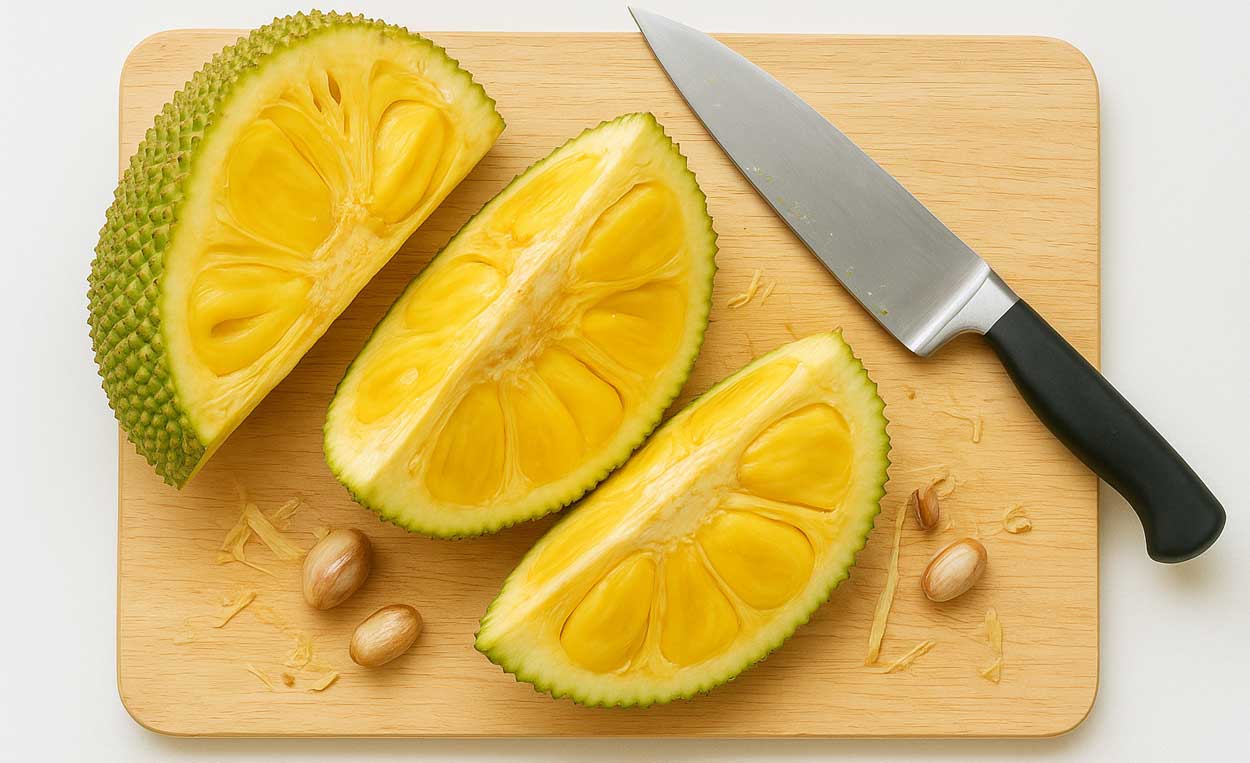
Inside a jackfruit, you’ll see:
A firm central core
Stringy fibers
Yellow fruit pods (the edible part)
Seeds inside each pod
To continue:
Cut out the hard center core
Pull away the stringy fibers
Set fibers aside (they are not eaten)
Don’t worry about sap—oil keeps it manageable.
Step 6: Separate the Edible Fruit Pods
Inside the fibers, you’ll find bright yellow pods.
These are the edible sections used in both ripe and unripe recipes.
How to extract:
Pull a pod free with your fingers
Open the pod and remove the seed
Place cleaned pods in a bowl
If the pods feel sticky, rub a little oil on your fingers while working.
Tip: Save the seeds!
They can be boiled or roasted and taste like mild chestnuts.
Step 7: Trim Off Any Tough Bits
Some pods have a firm base or extra fiber stuck to them.
Simply trim away:
Any hard pieces
Latex-covered bits
Thick fibers
Only the soft yellow pod is eaten.
Step 8: Store Your Jackfruit Properly
Fresh jackfruit pods can be stored:
In the fridge: up to 1 week
In the freezer: 2–3 months
If you have more jackfruit than you can use (very common!), freezing is the best option.
If You Can’t Find Fresh Jackfruit in the US
Many grocery stores carry:
Canned unripe jackfruit in brine (best for savory dishes)
Canned ripe jackfruit in syrup (best for desserts)
Fresh jackfruit tastes better, but canned jackfruit is a good backup and much easier to prepare.
Extra Tips for the Safest Jackfruit Cutting (Unripe)
✔ Always cut on a stable, non-slip cutting board
✔ Keep kids and pets away — unripe jackfruit is heavy
✔ Reapply oil whenever the knife begins to stick
✔ Use a trash bag for easy cleanup
✔ Move slowly and carefully — jackfruit is large and awkward
Safety and control are more important than speed.
Final Thoughts: The Safest Way to Cut Unripe Jackfruit in the US
Cutting a jackfruit for the first time can feel overwhelming, but with the right tools and a little patience, it becomes easy and even enjoyable. The key steps are simple: